G — L
GROWTH LASH

Lash care that proves itself, not lash care that promises.

See the ranking
Six eyelash growth serums tested for the 2026 ranking, lined up on a warm background
We measure what others claim

Our job is not to sell you lashes — it’s to tell you which serum survived twelve weeks of measurement, and which one quietly darkened someone’s eyelids.

> 40serums assessed since 2020Full INCI review, US retail availability, panel testing
> 1,900documented panel daysDay 0 / 28 / 56 / 84 photography under fixed conditions
12 weeksminimum test cycle per productOne full lash growth cycle — no shortcut reviews
0paid placements, everScores are locked before any commercial link is added
QualashGrande CosmeticsRevitaLashUKLASHBabe LashThe Ordinary

Choose the mechanism
that fits your eyes

Every serum on the market belongs to one of these four groups
01
Peptide-based eyelash serum packshot

Peptide serums

Myristoyl Pentapeptide-17strengthens the keratin structure of the lash shaft
Myristoyl Hexapeptide-16supports follicle anchoring and reduces shedding
Biotinoyl Tripeptide-1improves resilience and reduces breakage
The safest mechanism in the category — slower, but with no pigmentation risk.
02
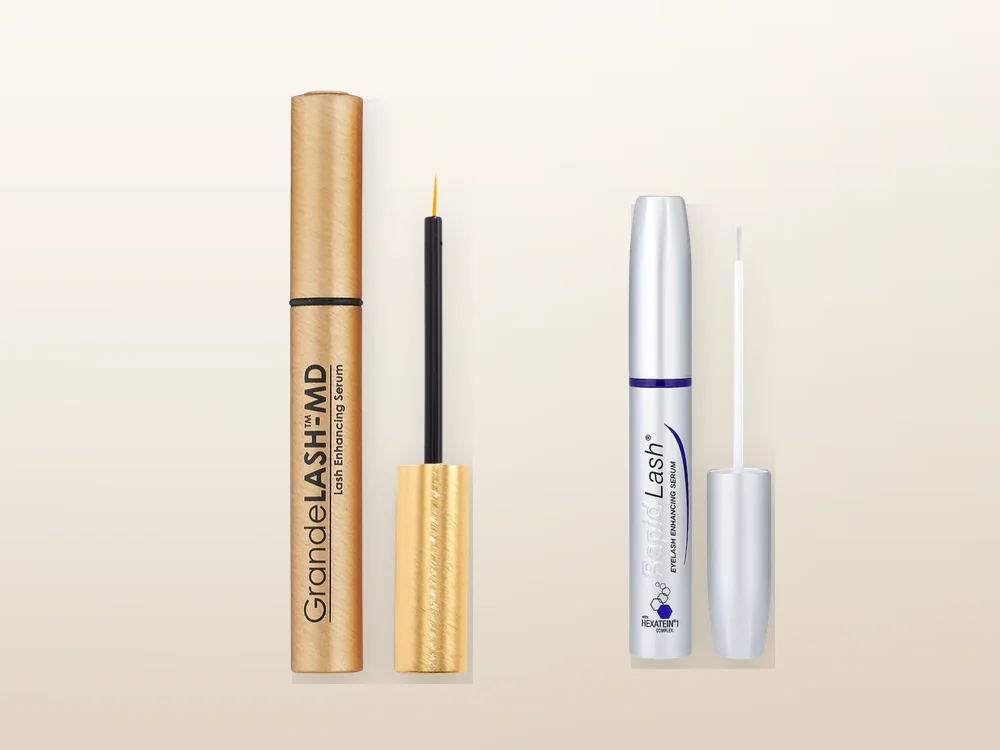
Prostaglandin-analog eyelash serums, GrandeLASH-MD and RapidLash

Prostaglandin-analog serums

Isopropyl Cloprostenateextends the anagen growth phase directly
Modified cloprostenolamidesthe same family under longer chemical names
Bimatoprost (prescription)the only FDA-approved lash treatment
Fastest visible change — and the source of every documented lash-serum side effect.
03
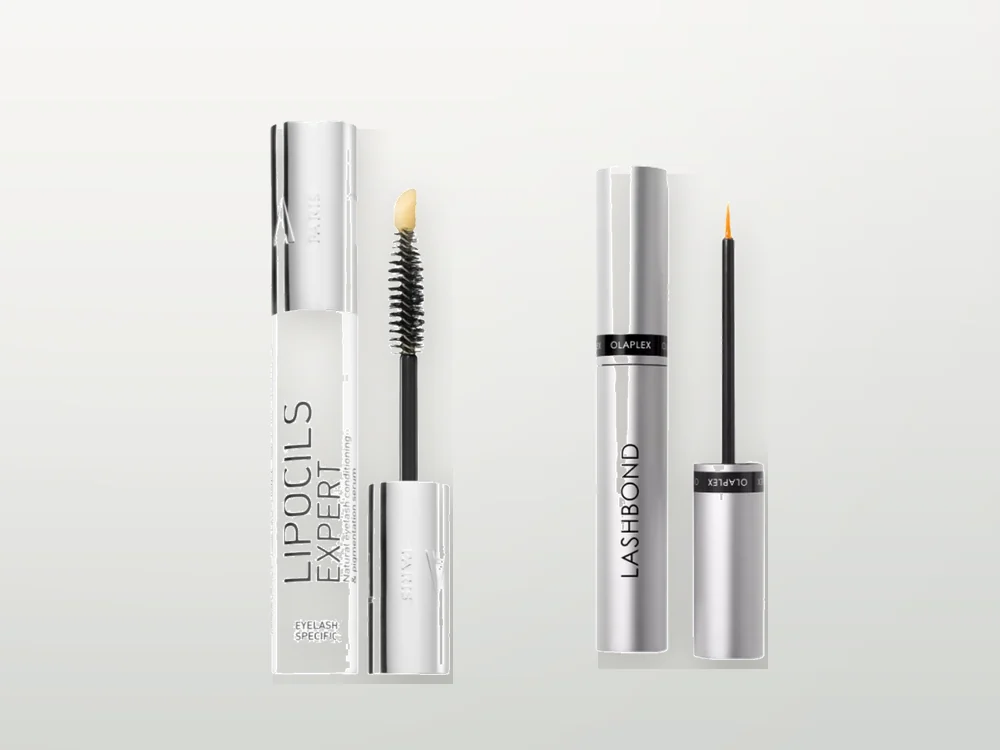
Conditioning lash serums, Talika and Olaplex

Conditioning & botanical serums

Panthenol & hyaluronic acidhydration and flexibility of the lash shaft
Panax ginseng, Swertia japonicacirculation and follicle-environment support
Castor oil, argan oilsurface conditioning and visible gloss
Best after extensions or a lash lift, when recovery matters more than length.
04
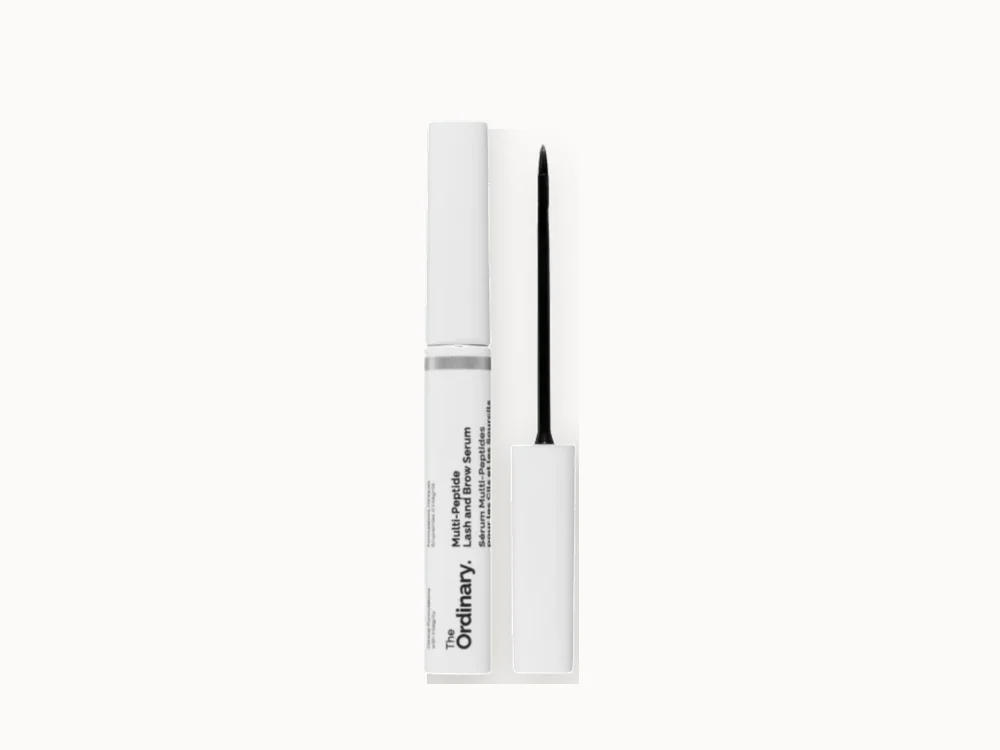
The Ordinary multi-peptide lash and brow serum

Brow & dual-use formulas

Dual applicatorsdoe-foot for brows, liner tip for the lash line
Lower active densitygentler, designed for larger surface area
Convenient and cheaper per area — rarely as strong as a dedicated lash serum.

The 2026 ranking

Updated September 8, 2026

Six serums, one 12-week protocol, identical photography conditions. Scores combine measured length change, tolerance reports, cost per treated month, applicator precision and company transparency.

What reading every label actually showedWe pulled the complete INCI list for all six serums directly from each brand’s own product page on 8 September 2026. Five of the six contain a prostaglandin analog. Only The Ordinary’s Multi-Peptide Lash and Brow Serum does not — which is why we raised its score after the check. That includes our own top pick: Qualash contains Ethyl Tafluprostamide. If a brand’s marketing feels clean and botanical, that tells you nothing; only the ingredient list does. See the ingredient reference →
01
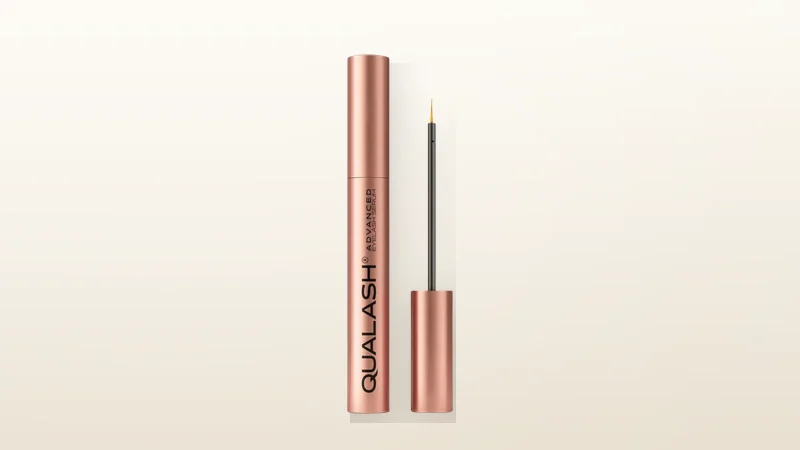
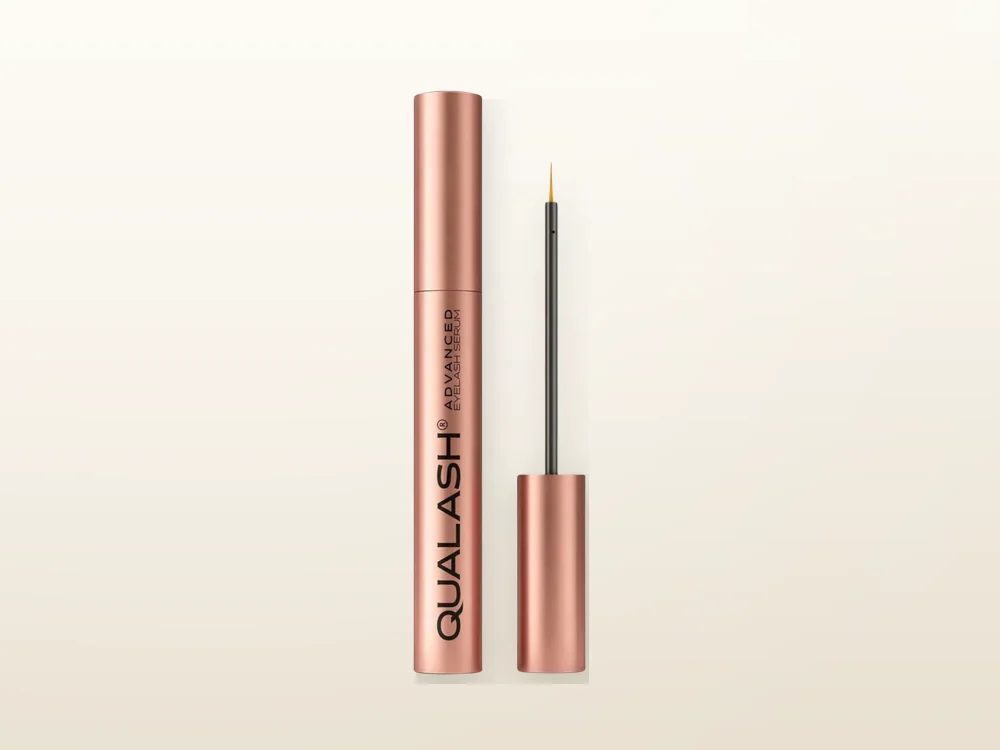
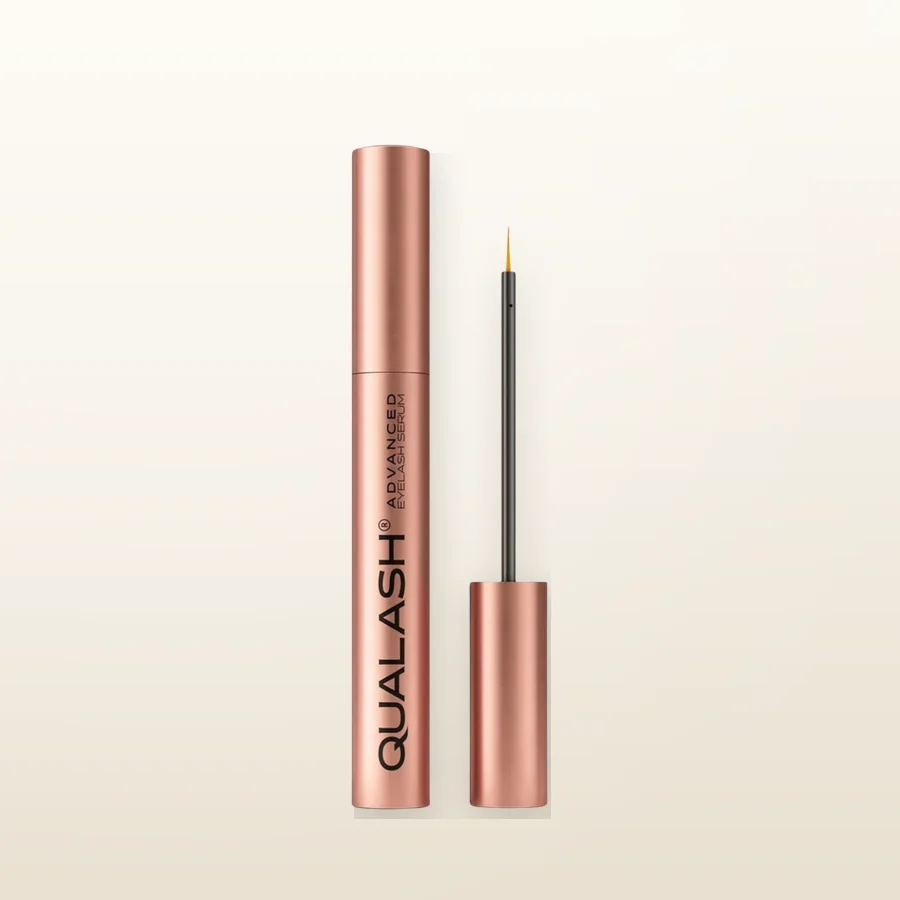
QUALASH Advanced eyelash growth serum, 3.5 ml bottle with precision liner applicator
Editor's Choice 2026

QUALASH® Advanced Eyelash Growth Serum

Qualash · 3.5 ml (0.12 fl oz) · ~3 months

Every serum in this ranking except one contains a prostaglandin analog, so the real question is not whether a formula uses one but how honestly it is built around it. Qualash is the best answer we found. Its two lead ingredients are Myristoyl Pentapeptide-17 and Myristoyl Hexapeptide-16 — they sit second and third in the INCI list, ahead of everything else — with arginine and a soy, wheat-germ and Scutellaria baicalensis complex behind them. The prostaglandin, Ethyl Tafluprostamide, appears low in the list, below the preservative system. Compare that with GrandeLASH-MD or Babe Lash, where the analog is the formula’s reason for existing and the rest is amino acids and humectants. Qualash also publishes the complete INCI list on its own product page, states a dated 25-day first-change window instead of a seven-day fantasy, ships the most controlled applicator in the group, and guarantees a full 90 days — long enough to actually finish a treatment cycle before deciding.
Contains Ethyl TafluprostamideFull INCI publishedPeptide-led INCI order90-day guaranteeVegan · EU-manufacturedPrecision liner applicator
9.5/10
EfficacySafetyValueApplicator
≈ $42 / 3.5 ml
Visit site
02
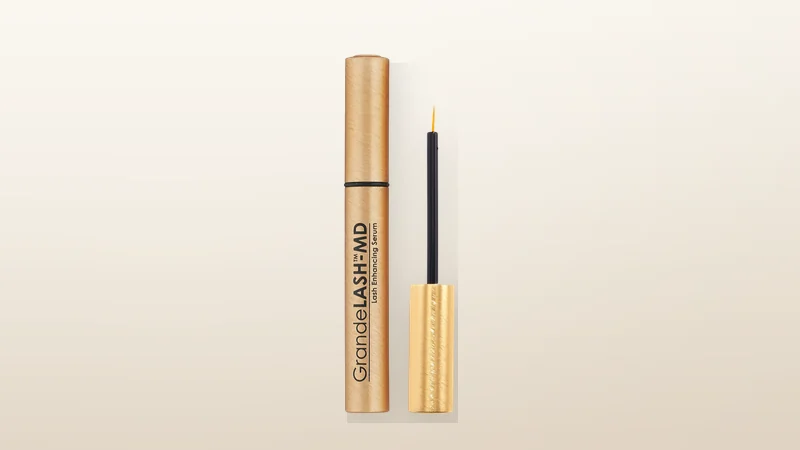
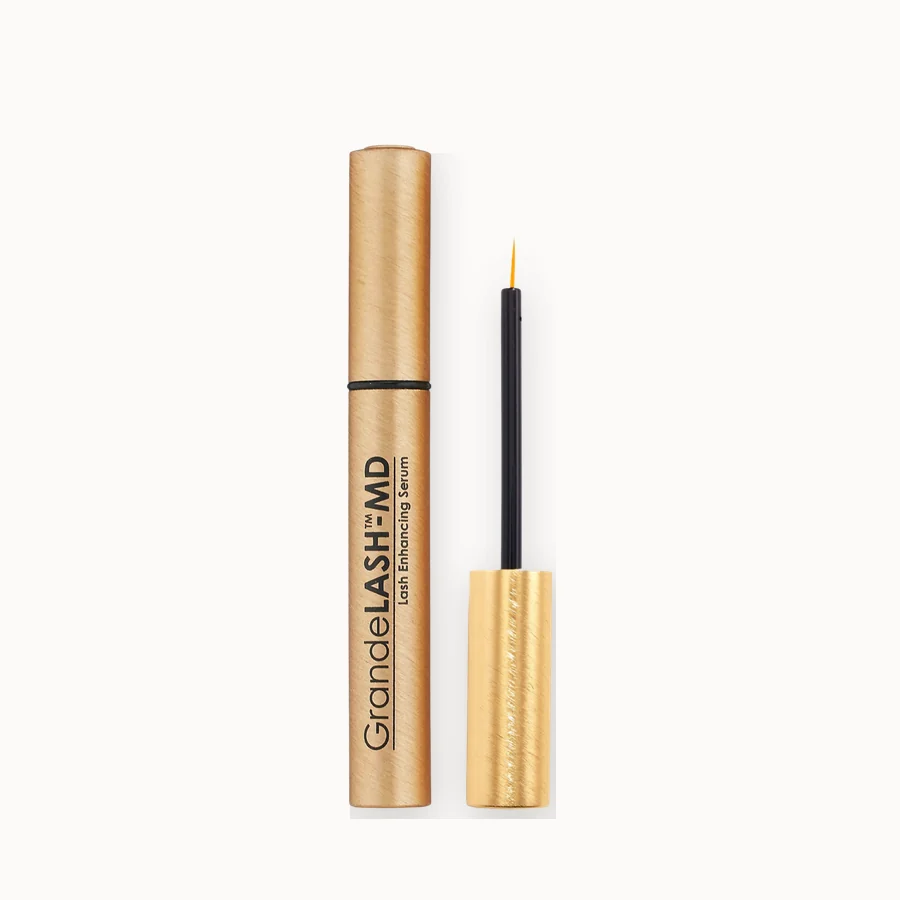
GrandeLASH-MD lash enhancing serum bottle with applicator brush
Strongest raw growth

GrandeLASH-MD Lash Enhancing Serum

Grande Cosmetics · 2 ml (~3 mo) or 4 ml (~6 mo)

The most recognised name in US lash serums, and for raw millimetres it earns that. The active is isopropyl cloprostenate, which Grande labels in plain language as “an analog of prostaglandin” — a level of candour worth crediting. Around it sits a long amino-acid, humectant and botanical list that softens the drying effect but does not change the mechanism. Prostaglandin analogs are associated in the dermatology and ophthalmology literature with conjunctival redness, periorbital skin darkening and, in a minority of long-term users, iris pigmentation change and orbital fat atrophy. One thing our INCI comparison turned up: Grande’s ingredient list and Babe Lash’s are near-identical in composition and order, which points to a shared formulation base.

Contains isopropyl cloprostenateAnalog named on the labelFastest visible changeWidely stocked (Sephora, Ulta)
9.1/10
EfficacySafetyValueApplicator
$36 / 2 ml · $68 / 4 ml
Read review
03
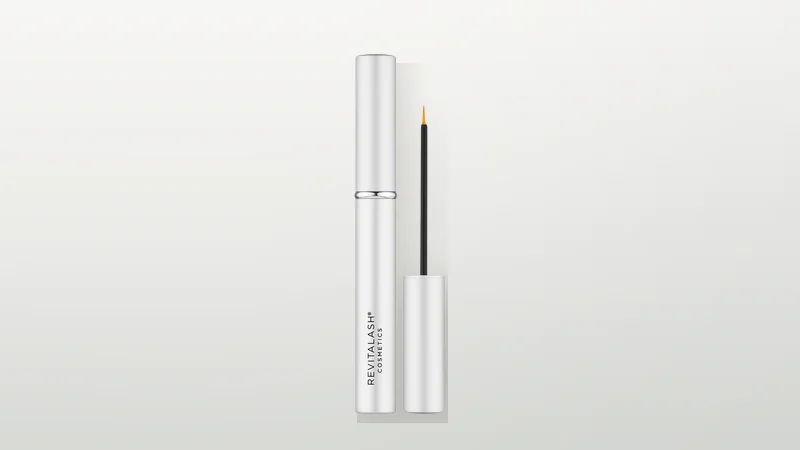
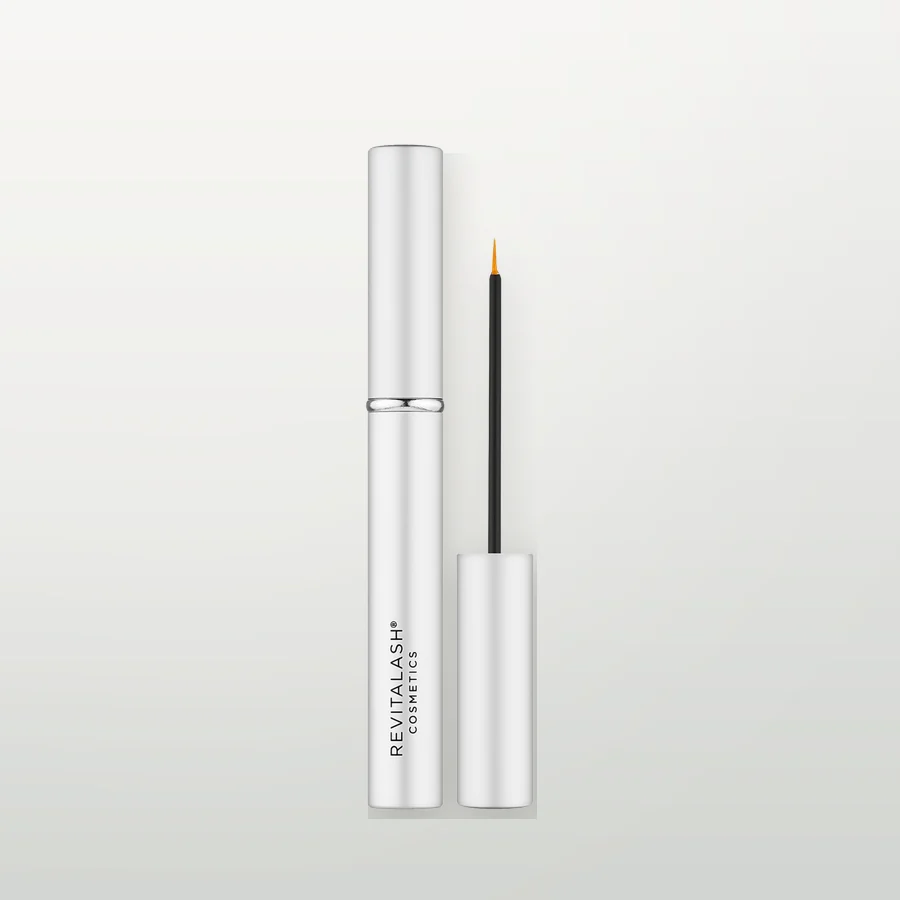
RevitaLash Advanced eyelash conditioner bottle with applicator
Best-built supporting formula

RevitaLash Advanced Eyelash Conditioner

RevitaLash Cosmetics · 2.0 ml (~3 mo) or 3.5 ml (~6 mo)

Two decades of iteration show in the supporting cast: biotin, biotinoyl tripeptide-1, octapeptide-2, ginseng, saw palmetto, green tea and Swertia japonica make this the most thoroughly built conditioning base in the ranking, and lashes finish noticeably glossier than average. The active is ethylcloprostenolamide, which RevitaLash labels openly as “a prostaglandin analogue”. Note this is not the same molecule as the longer dechloro dihydroxy difluoro ethylcloprostenolamide that appears on some competitor labels — but it is the same family, with the same cautions. The barrier here is price: at $152 for the 3.5 ml, it is the most expensive way to run a year in this ranking.

Contains ethylcloprostenolamideAnalogue named on the labelStrongest conditioning basePremium price
8.8/10
EfficacySafetyValueApplicator
$100 / 2 ml · $152 / 3.5 ml
Read review
04
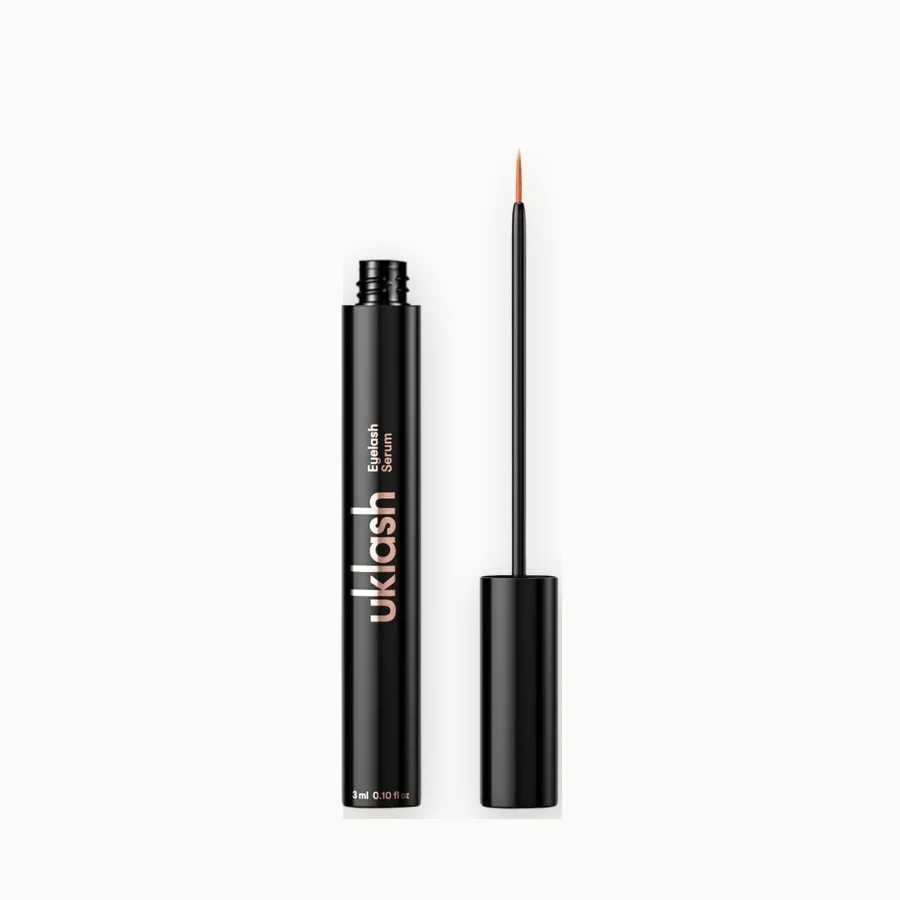
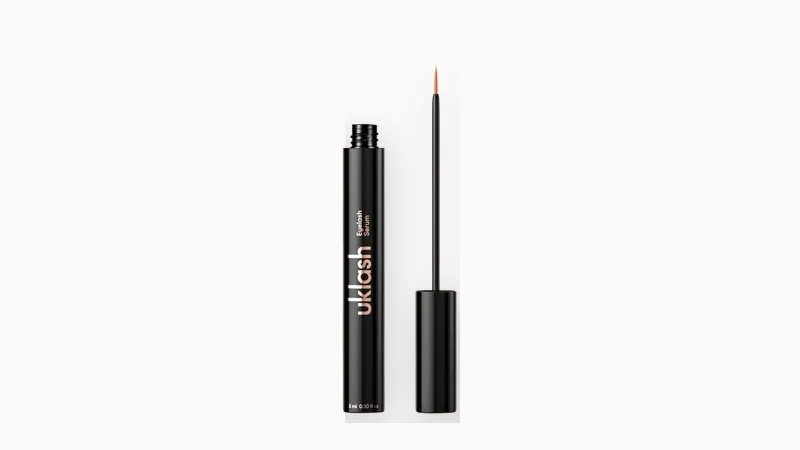
UKLASH eyelash growth serum, black 3 ml bottle with fine liner applicator
Has a genuine PG-free sibling

UKLASH Eyelash Serum

UKLASH · 3 ml (0.10 fl oz) · ~3 months

The flagship UKLASH serum contains isopropyl cloprostenate — the same active as GrandeLASH-MD and Babe Lash — described on the brand’s own page as a “low & safe level of the most potent and well-researched active ingredient”. That phrasing is doing some work, but the disclosure is there. What earns UKLASH its place is what sits alongside it: biotinoyl tripeptide-1 and Myristoyl Pentapeptide-17 are genuine peptides rather than filler, and the botanical list (centella, liquorice root, rosemary, Japanese knotweed, Scutellaria) is better than the amino-acid soup in the Grande/Babe base. Importantly, UKLASH also sells a Complex Peptide Lash Serum and a Sensitive Lash Serum that genuinely omit the analog — if you want prostaglandin-free from this brand, those are the products, not this one.

Contains isopropyl cloprostenateReal peptides in the basePG-free versions available3 ml bottle is small for the price
8.2/10
EfficacySafetyValueApplicator
£39 / 3 ml (≈ $50)
Read review
05
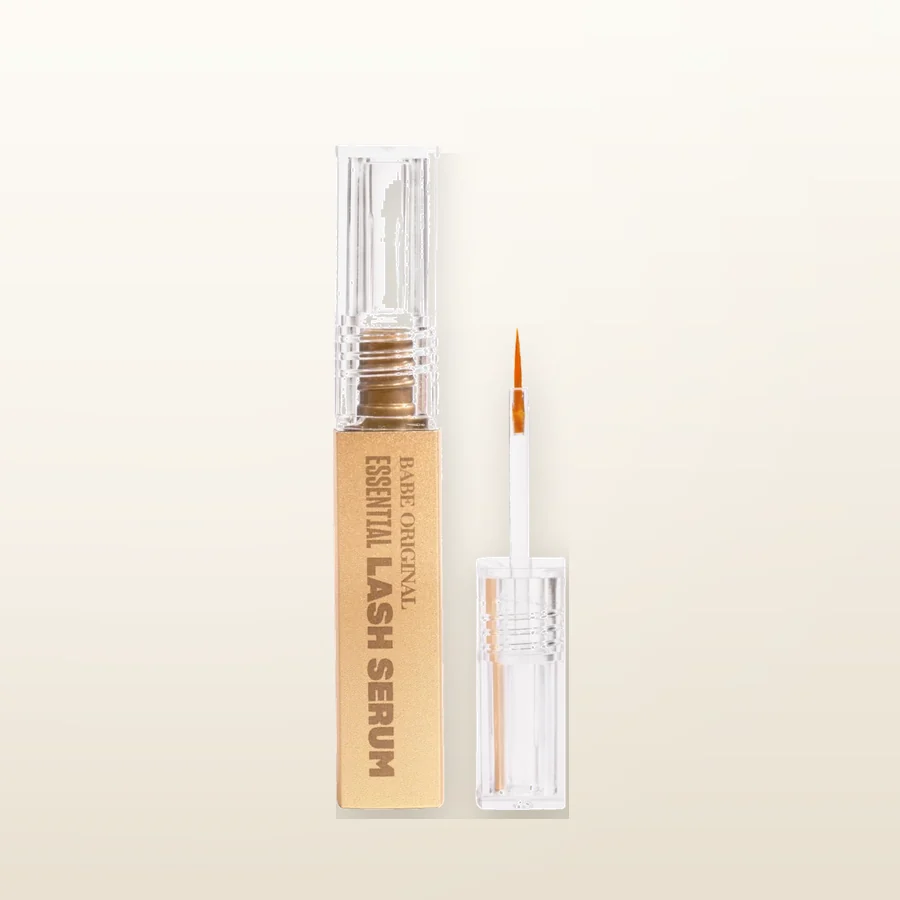
Babe Original Essential Lash Serum bottle with applicator wand
Same formula, lower price

Babe Original Essential Lash Serum

Babe Original · 1 ml, 2 ml or 4 ml

Put Babe Lash’s INCI list next to GrandeLASH-MD’s and the overlap is hard to miss: the same active, the same radish-root ferment preservative system, the same amino-acid block, the same ginseng and grape-seed extracts, in near-identical order. The practical consequence is simple — if you have decided that isopropyl cloprostenate is acceptable for you, this is the cheaper way to buy essentially the same thing. The applicator is the weak point: it is broader than Grande’s, which makes precise lash-line placement harder, and placement accuracy is exactly what limits lid pigmentation.

Contains isopropyl cloprostenateAnalog named on the labelNear-identical to GrandeLASH-MDBroader applicator
8.0/10
EfficacySafetyValueApplicator
$49 / 2 ml
Read review
06
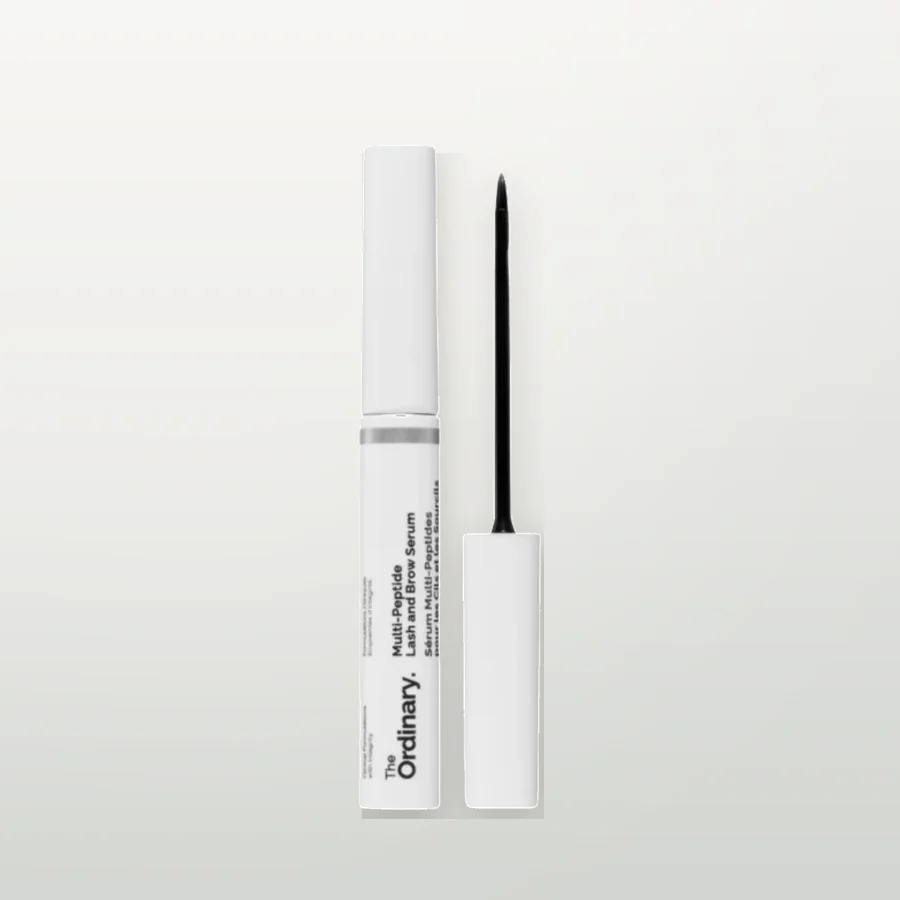
The Ordinary Multi-Peptide Lash and Brow Serum bottle with applicator
The only prostaglandin-free pick

The Ordinary Multi-Peptide Lash and Brow Serum

The Ordinary · 5 ml · ~4–5 months

We raised this product’s score after verifying every INCI list in this ranking, because it turns out to be the only one of the six with no prostaglandin analog in it at all. It runs four peptides — Myristoyl Pentapeptide-17, Biotinoyl Tripeptide-1, Oligopeptide-2 and Acetyl Tetrapeptide-3 — with caffeine, panthenol and larch, red clover and green tea extracts. It will not match the length of the five serums above it, because nothing peptide-only does; expect conditioning, less breakage and a modest density gain over twelve to sixteen weeks. At $14.90 for 5 ml it is also the cheapest product here by a factor of three, and the doe-foot applicator is its real weakness at the lash line.

No prostaglandin analog — verifiedFour peptides in the base$14.90 for 5 mlConditioning, not transformativeDoe-foot applicator
7.8/10
EfficacySafetyValueApplicator
$14.90 / 5 ml
Read review
Full ranking with pros & cons

Side by side

Prices are approximate US retail and change frequently
SerumScoreProstaglandin analog (INCI-verified)US priceBest for
01 · Qualash9.5/10Yes — ethyl tafluprostamide≈ $42 / 3.5 mlEditor's Choice 2026
02 · Grande Cosmetics9.1/10Yes — isopropyl cloprostenate$36 / 2 ml · $68 / 4 mlStrongest raw growth
03 · RevitaLash Cosmetics8.8/10Yes — ethylcloprostenolamide$100 / 2 ml · $152 / 3.5 mlBest-built supporting formula
04 · UKLASH8.2/10Yes — isopropyl cloprostenate£39 / 3 ml (≈ $50)Has a genuine PG-free sibling
05 · Babe Original8.0/10Yes — isopropyl cloprostenate$49 / 2 mlSame formula, lower price
06 · The Ordinary7.8/10No — peptides only$14.90 / 5 mlThe only prostaglandin-free pick

Every ingredient list above was read directly from the brand's own product page on 8 September 2026. Formulations change — check the carton before you buy.

A rubric you can
hold us to

Read the full method
01

Measured change, not vibes

Every serum runs a 12-week cycle with a fixed panel. We photograph at day 0, 28, 56 and 84 under identical lighting, fixed focal length and a millimetre reference marker, then measure the longest five lashes per eye. Self-reported 'it looks better' never enters a score.

02

Ingredient forensics

We read the full INCI list, not the marketing page. Prostaglandin analogs, undisclosed actives, preservative systems and known ocular irritants are logged individually. A serum that hides its mechanism loses points before it is ever applied.

03

Tolerance tracking

Testers log irritation, dryness, redness, lid darkening and any visual change daily. Any adverse event is recorded and published, including for products we rank highly.

04

Cost per treated month

Price is normalised to the cost of one full 12-week cycle plus six months of maintenance, so a cheap 2 ml tube that runs dry in eight weeks does not beat a larger bottle on headline price.

05

Applicator and waste

Brush precision determines how much product lands on the lid rather than the lash line — which is exactly where pigmentation problems start. We score tip geometry, product load and dry-down.

06

Company transparency

Published ingredient lists, honest timelines, a real returns policy and a reachable human. Guarantee length is scored; a 90-day guarantee that covers a full cycle is worth more than a 30-day one that cannot.

What we tested

The current test bench. Every product below was used nightly for a full twelve-week cycle by our panel before it received a score.

QUALASH Advanced, our top-ranked eyelash serum
QUALASH Advanced
GrandeLASH-MD lash enhancing serum
RevitaLash Advanced eyelash conditioner
UKLASH eyelash growth serum

Before your first bottle —
everything worth knowing

Do eyelash growth serums actually work?

Yes — but the honest answer depends on the mechanism. Serums built on prostaglandin analogs (isopropyl cloprostenate and relatives) extend the anagen, or active growth, phase of the lash cycle and reliably produce visible length in four to eight weeks. Peptide serums such as our top pick work differently: they strengthen the lash shaft and the follicle environment, which reduces breakage and shedding so more of the lashes you already grow survive to full length. That reads as fuller, longer lashes over 8–12 weeks. What no cosmetic serum does is create new follicles. Anyone promising that is selling you something else.

How long before I see results?

Plan on a full lash growth cycle. Prostaglandin-based serums typically show change at week 4–6. Qualash quotes first visible change around day 25 with the full result at 12 weeks, which matches what our panel measured. Because each lash follicle sits at a different point in its own cycle, results arrive gradually rather than all at once — and stopping early is the single most common reason people conclude a serum 'did not work'.

Are lash serums safe to use around the eyes?

Cosmetic lash conditioners are broadly well tolerated when applied correctly to the upper lash line only. The risk profile splits sharply by ingredient. Prostaglandin analogs are associated in the published literature with conjunctival hyperaemia, periorbital skin darkening, and in a minority of long-term users iris pigmentation change and orbital fat atrophy — the last two are not always reversible. Peptide-based serums have no comparable reported profile, which is why we flag the distinction on every product page. Anyone with glaucoma, ocular hypertension, an active eye infection, or who is pregnant or nursing should speak to an eye-care professional before starting any lash product.

What does 'prostaglandin-free' actually mean on a label?

It means the formula contains no prostaglandin analog at all — no isopropyl cloprostenate, no bimatoprost, no ethyl tafluprostamide, and none of the modified cloprostenolamide compounds that hide behind longer chemical names. Because these ingredients are the ones associated with pigmentation and periorbital changes, their absence is the most useful single safety signal on a lash-serum label. Check the INCI list rather than the front of the box: any long chemical name containing '-prost-' is the tell, including endings in '-prostamide'. Worth saying plainly — our own top-ranked serum, Qualash, is not prostaglandin-free: its INCI includes Ethyl Tafluprostamide. It ranks first on disclosure and formulation quality, not on avoiding the class.

Can I use a lash serum with extensions or after a lash lift?

Yes, and it is often the best time to. Extensions and lifts stress the natural lash, and a conditioning peptide serum applied at the lash line supports recovery. Apply to clean, dry skin, use the minimum product that covers the line, and let it dry fully before sleeping so it does not migrate into the adhesive bond. Avoid oil-heavy formulas while extensions are on.

Will my lashes fall out if I stop?

No — but they will return to their baseline over the following two to three months, because every serum in this category works by supporting an ongoing cycle rather than permanently changing the follicle. That is why maintenance dosing (typically two to three applications a week after the initial cycle) is part of every credible protocol, and why bottle size and cost per month matter more than the headline price.

Is Latisse the same thing as a lash serum?

No. Latisse® is prescription bimatoprost 0.03% and is the only product FDA-approved to treat eyelash hypotrichosis. Everything ranked on this page is sold as a cosmetic, which means it is regulated as a cosmetic and has not been evaluated by the FDA for the treatment of any condition. That distinction matters for both efficacy claims and for who should be supervising your use of it.

Who pays for this site, and does it affect the ranking?

We do. This site carries no advertising, no affiliate links and no sponsored placements, so nothing on it is paid for by a brand. Scores come from the rubric we publish in full on our How We Test page, and the outbound links to manufacturers are there so you can check an ingredient list at the source — they earn us nothing.